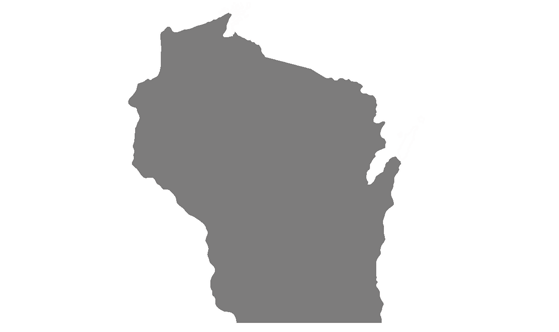


MADISON, Wis. (CN) - The Wisconsin Supreme Court said on Friday that the governor's creative use of his partial veto powers to extend a school tax limit increase by 400 years is constitutional in a majority opinion along ideological lines.
The Wisconsin Legislature, in its 2023-2025 budget bill, approved a two-year limit on schools' power to raise money by increasing tax levies in their respective districts. But when the measure crossed Governor Tony Evers' desk, he struck several digits, whole words and a dash to change the end date of the bill to the year 2425.
The new sunset became law after the state Assembly failed to hold a vote in time to override the veto as required by law. Soon after, two taxpayers sued the governor for his use of what they viewed as an illegal "Vanna White veto," named after the iconic Wheel of Fortune host.
Wisconsin passed a constitutional amendment in 1990 prohibiting the Vanna White veto, which refers to striking individual letters to create a new word. Scott Rosenow from the WMC Litigation Center argued on behalf of the taxpayers that striking numbers to create a new year, as the governor did to this bill, is the same thing.
The state's high court heard oral arguments from the taxpayers in October 2024 where they asked the court to create a rule prohibiting the governor from extending dates in appropriation bills. The petitioners did not, however, ask the court to overturn previous partial veto decisions.
On Friday, the justices issued an opinion that narrowly interpreted the court's precedent to reject the taxpayers' challenge to Evers' partial vetoes.
The decision ultimately rests on Section 10 of the Wisconsin Constitution, which imparts onto the governor the power to check the legislature by vetoing appropriation bills. This section was amended in 1930 to allow partial veto, in 1990 to disallow Vanna White vetoes and again in 2008 to ban combining parts of sentences to create a new one.
That section does not mention deleting digits to create new numbers, and try as he might, Rosenow could not convince the justices that digits can also be considered letters. In fact, during oral arguments, Justice Ann Walsh Bradley lectured him on grammar and third-grade mathematics to make the point that Section 10 does not apply to numbers.
Rosenow also asked the court to look to its ruling in C.U.B., in which the majority said that the governor could slash appropriated funds as long as he was still approving part of the original amount. He argued that the 400-year extension was not a partial approval, and cannot stand under C.U.B.
The justices responded that C.U.B. is not applicable to the year editing that the governor did in his 2023 vetoes in question here.
The majority opinion, written by Justice Jill Karofsky and joined by Justice Rebecca Dallet, Justice Janet Protasiewicz and Walsh Bradley, suggested as recourse that the Legislature write bills more creatively to avoid the governor's pen or even push another constitutional amendment to further limit his powers.
The justices seemed united during oral arguments in finding the 400-year extension completely absurd: "It's starting to feel like the sky is the limit," Justice Annette Ziegler said, sounding exasperated. "Perhaps today we are at a fork in the road. Should we, today, take a clear stance?"
In Friday's opinion, Karofsky did not again address the absurdity of the extension.
Justice Brian Hagedorn penned a scathing dissent accusing his ideological opposites of neglecting the state constitution entirely: "When presented with a clear opportunity in this case to reboot our mangled jurisprudence, the majority responds by blessing the constitutional monstrosity all while pretending its hands are tied."
The partial veto was intended to allow the governor to consider multiple appropriations in a single bill, rather than vetoing a bill in its entirety over a disagreement with one provision. Hagedorn says we have strayed too far from the intended application, and created a "one-man legislature" in the governor's seat.
In his 19-page dissent, Hagedorn gave a lecture on constitutional law, bicameralism and the role of the courts to check the system.
"Instead of treating the fractured legal framework with another quick fix of judicial epoxy, it is time to raze it to the ground," Hagedorn said.
Hagedorn, joined by Chief Justice Annette Ziegler and Justice Rebecca Bradley, reflected on the court's split 2020 decision in Bartlett v. Evers. Bartlett was a challenge to four partial vetoes that completely changed the subject matter of the law in front of him.
The dissenting justices contend that the court should have continued the work of Bartlett by putting a hard check on the partial veto power, even though they were not asked to consider the motley of varying precedent on this subject.
Wisconsin State Assembly Speaker Robin Vos seized the opportunity to chastise "liberal judges" for allowing the governor to "raise property taxes unchecked by any other branch of government" for 400 years.
The language of the law allows school districts to make adjustments capped at $325 per pupil, per year.
Source: Courthouse News Service